Self-Advocacy Role in Leadership

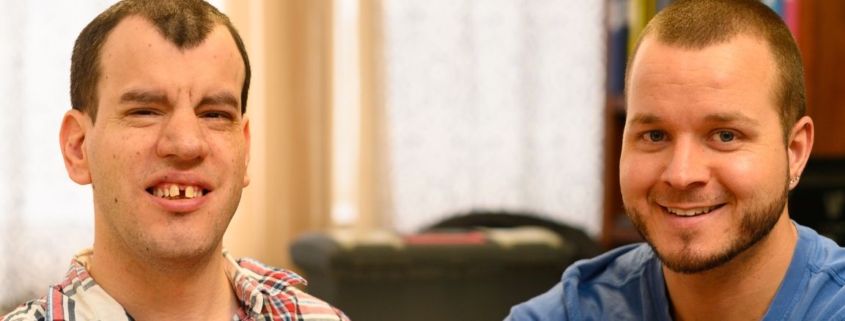
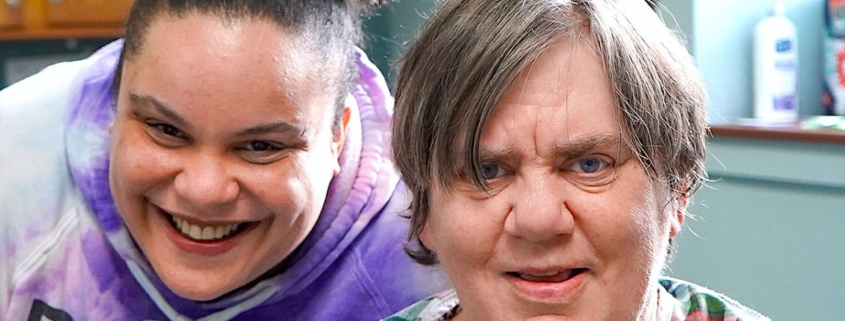
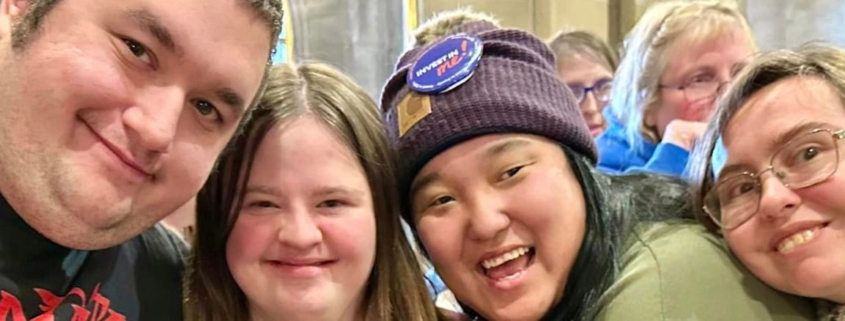
People with intellectual and/or developmental disabilities (IDD) have the right to advocate and/or be supported to act as self-advocates. Self-advocates are people who exercise their rights by communicating for and representing themselves and others, with whatever supports they need. Self-advocates must have a meaningful role in decision-making in all areas of their daily lives and in public policy decisions that affect people with IDD.

It is The Arc New York’s position that this requires that people with intellectual and other developmental disabilities have the following opportunities and rights:

People with IDD must have the right to advocate for themselves and others. People with IDD have the right to speak or act on their own behalf and alongside other people with disabilities, whether the issue is individual or related to broader public policy. Recognizing these rights in a respectful partnership between people with and without disabilities can lead to better outcomes and better lives for everyone.

Self-advocates provide important knowledge, experience, and skills that individuals, organizations, and government agencies need in order to effectively support the needs of and enhance the lives of people with IDD. To promote this participation, it is critical to acknowledge the important role that self-advocates play in developing leadership skills and increasing people’s pride, influence, and opportunities. To achieve this partnership between self-advocates and their support persons or organizations, the following must occur:

  • People with IDD must have the power to make informed decisions about their own lives and the services they receive, including those who need support and those who have legally appointed guardians.
  • People with IDD have access to necessary accommodations and supports in order to meaningfully participate in meetings, conferences, task forces, boards, and other forums when issues and policies that are important to them are discussed (“Nothing about us without us” principle). These accommodations include but are not limited to:
    • Extra time planned for meetings to ensure the participation of each person;
    • Enhanced and alternative communication methods, such as communication devices, sign language, or interpreters;
    • Availability of technology supports and access through technology to ensure participation;
    • Materials provided ahead of the meeting for review;
    • Meeting materials written in plain language;
    • Support from direct support professionals and other staff, when needed; and
    • Funding for transportation and travel-related costs, including support staff
  • When communicating with or about people with IDD, it is important to respect the way that people with disabilities prefer to be identified. In most circumstances, person-first language is most appropriate, e.g. person with IDD. However, some people with IDD prefer identity-first language, e.g. autistic person. In addition, people’s self-identified pronouns for gender identity must be respected.
  • Policy development must include self-advocates and be regularly evaluated to ensure that self-advocates are actively and meaningfully participating.
  • Families, advocacy organizations, service providers, and government agencies must work with self-advocates to increase public awareness of the importance of the self-advocacy movement.
  • Self-advocacy organizations and individual self-advocates must be supported to develop and sustain the self-advocacy movement, including mentoring youth and young adults with IDD to become self-advocates.
  • Foundations and federal, state, and local funding agencies must promote self-advocacy as a key matter of policy. These entities must provide enough money and resources to make sure that (1) people with IDD have accessible information, training, and education in self-advocacy, and (2) providers have the information they need to deliver person-centered services that address self-advocate-led trends in policy and design.
  • Children and youth with IDD must be supported by families, schools, direct service providers, and other entities to learn self-advocacy skills and put these skills into practice. Children and youth with IDD should have opportunities to use advocacy skills in educational planning, including Individualized Education Programs (IEPs), transition plans, and all decision-making.
  • Adults with IDD can be effectively supported by peers, self-advocates, families, direct service providers, and other entities to learn self-advocacy skills and put them into practice. In order to continually use these skills, adults with IDD should have opportunities to use self-advocacy skills in service planning and daily decision-making.
  • Self-advocates must be afforded the same dignity of risk that all people have to make informed decisions and learn from any mistakes that impact themselves and others in the community.
  • Self-advocates must be included on boards and other advisory bodies for disability advocacy organizations, service providers, and agencies who serve people with IDD, as well as encouraged to meaningfully provide input on the policies, programs, and evaluation methods of those organizations and agencies.
Safety and Protection

People with intellectual and other developmental disabilities have the same rights and basic safety and protection needs as others. At the same time, they face numerous additional barriers, including protection risks, heightened risk of violence, exploitation and abuse by the general public, service providers, and even their families. People with disabilities are not a homogenous group and safety plans must address the unique needs of each person. Those plans must include protection from harm and injury throughout their lives, while also being provided with the tools and supports necessary to protect themselves.

It is the Position of The Arc New York that:

  • A supportive network of family, friends, and advocates of people with I/DD and other disabilities are often times the first line of protection from harm. However, if for any reason the above groups are the cause of harm, or unable and/or unwilling to provide the necessary protections, the appropriate protective agencies, support, and advocacy groups must be accessible and available to ensure that local, state, and federal laws are adequately enforced.
  • People with intellectual and other developmental disabilities must be given the opportunity to learn to live safely in their community, protect themselves, and be able to seek appropriate assistance.
  • Safety and fire drills must be designed with sensitivity to people’s unique needs and capabilities, particularly when activities occur unexpectedly and quickly.
  • Drills must be planned with sufficient frequency to be realistic and without the possibility for “opting-out.”
  • In accordance with OPWDD regulations and Mental Hygiene Law, parents and/or guardians must be informed of any investigation of abuse and neglect as required and be provided a statement of the final disposition of the investigation
  • Providers of supports and services must:
    • Screen all applicants to eliminate those with a history of perpetrating abuse, neglect, or a criminal record and evaluate all employees in accordance with NYS regulations, including those regarding the Justice Center, OPWDD and NYS Education Department, on a regular basis to ensure appropriate job performance
    • Ensure that appropriate safety and emergency management plans are in place, and that all staff have the associated training and competence to work effectively and appropriately with people with intellectual and other developmental disabilities.
    • Train staff to report allegations of abuse and neglect directly to the Justice Center to ensure the proper procedures are followed to address the allegations.
    • Immediately investigate allegations of abuse or neglect and take immediate corrective action when warranted
    • Take steps to limit access to Personally Identifiable Information(PII) and Protected Health Information(PHI), acknowledging the potentially grave consequences imposed by breaches and a person’s right to privacy. Access must be on a need-to-know basis and safeguards must include use of administrative, physical, and technical means.
Rights

Persons with disabilities have the same rights as all people to non-discrimination, access, equality of opportunity, inclusion, and full participation in society. These are the basic principles underlying the Americans with Disabilities Act. However, Individuals with disabilities often face discrimination in the workplace and when trying to access health care coverage and services. This type of discrimination can lead to negative health outcomes and increased costs for people living with disabilities.

 Persons with intellectual and other developmental disabilities are first and foremost people. As such, are entitled to all of the fundamental rights. They have the right to opportunities that enable them to make choices for themselves and to exert a measure of control over their physical and social environment, without regard to race, gender, sexual orientation, age, ability, national origin or incarceration. It should be recognized that they may need some accommodations and supports to enable them to exercise these rights and inherent responsibilities.

It is The Arc New York’s position that fundamental rights include but not be limited to the right:

  • To choose a place to live, to do productive work, engage in leisure time activities, and to worship.
  • To have the right to be involved in the planning of supports being offered by service providers and in making decisions that impact those supports.
  • To acquire and maintain adequate financial resources for independent or supported living.
  • To have consistent, trained, and fairly compensated staff to provide the necessary support and access to the community.
  • To have consensual life partners and to have and keep children.
  • To full information and access to appropriate childcare and parenting skills while the decision to have children is being considered and access to ongoing supports and services once the decision to become a parent has been made.
  • To receive appropriate education and training, rehabilitation, guidance, and counseling.
  • To access all governmental programs in concert with all people.
  • To receive individualized services, supports and technologies designed to meet specific needs and help ensure optimal functioning.
  • To receive appropriate, affordable and accessible wellness services, medical, dental and mental health care.
  • To enhance quality of life through respite care, personal assistance, specialized training, individualized family assistance, retirement and old age planning.
  • To be free from discrimination.
  • To have privacy.
  • To receive fair and equal treatment in the criminal justice system.
  • To vote in fully accessible polling places.
  • To protection and advocacy services during all stages of life.
  • To be protected through the application of federal, state and/or local protection laws and regulations, from decisions or lack thereof, made by parents or guardians or service providers when the individual’s life, health, safety or general well-being are compromised.
  • To membership, employment and leadership in The Arc New York, Inc.
  • To any and all other rights enjoyed by all people.
Recreation, Leisure, and Social Engagement

Participation by people with intellectual and other developmental disabilities in the same leisure, recreational and social activities that are offered to all citizens in their communities is an essential aspect of their quality of life. Recreational and leisure activities facilitate the development of community connections and can have significant benefits to physical and emotional health and well-being.

It is The Arc New York’s position that:

  • Access to recreational and leisure activities appropriate to one’s interest and age level is a necessity and has the same level of importance for resource allocation as education, employment and living arrangements;
  • Integrated leisure, recreational and social activities are an essential and legitimate component of a good quality of life for persons with intellectual and other developmental disabilities;
  • Local communities and school districts have a responsibility to ensure that parks, playgrounds, recreational facilities and other outdoor recreational areas are accessible to people with intellectual and other developmental disabilities;
  • Support must be provided and if needed, assistive technology, should be used to increase participation in inclusive recreation and leisure activities;
  • Information and education must be provided to people with intellectual and developmental disabilities and their families to ensure they are aware of the opportunities and benefits of inclusive recreation and leisure activity
Quality Improvement

High-quality standards must be reflected throughout the full continuum of services and supports for people with intellectual and other developmental disabilities and within the work environment of the people who support them. Quality is reflected in high levels of personal satisfaction with life situations andevidenced by measurable outcomes and a continuous improvement process. Person-centered service planning and delivery, community inclusion, protection, and safety are an essential part of The Arc New York’s core values

It is the Position of The Arc New York that quality supports and services can be enhanced when the following occur:

  • Quality is defined by the person and their support network.
  • The person, their family, and their support network, drive the design of the supports and ensure that these supports are available in the person’s home community.
  • Providers respect the rights, dignity and privacy of people and provide supports in the least restrictive manner.
  • People and their support network have the ability to explore options and make informed decisions.
  • Supports are person-centered and reflect an integrated process regardless of the person’s diagnosis and build upon the person’s strengths and talents in a positive manner.
  • Appropriate levels of resources are offered to the person, to include quality staffing and a broad array of supports, in a timely fashion.
  • Providers of supports and services must be in compliance with all regulatory authorities.
Public and Media Recognition of Persons with Intellectual and Other Developmental Disabilities

People with intellectual and other developmental disabilities are fully participating members of society and their community. Recognizing a person with I/DD is equally as valuable as any other member of the community that has made an important contribution.

It is the Position of The Arc New York that every effort must be made to:

  • Promote and support people with intellectual and other developmental disabilities to speak, advocate and represent themselves publicly.
  • Promote and encourage the presentation of stories with positive and meaningful news that recognize the accomplishments of people with intellectual and other developmental disabilities.
  • Seek to identify, correct and/or eliminate the use of terms which are pejorative and can devalue people, including any version of words which are historical, dated or arcane, such as “retarded or mentally retarded”.
  • Support and promote the development and presentation of educational curricula across all grade levels in New York state schools, which explains the history and accomplishments of people and systems in the field of disabilities.
  • Use any and all public means and forms of media to promote persons with intellectual and other developmental disabilities in a manner which celebrates and reinforces their talents, skills and value as productive members of our communities.
  • Serve as an example, through a Chapter commitment, to employ and recognize people with intellectual and other developmental disabilities in valued employment and leadership roles.
Positive Behavioral Supports

People with intellectual and other developmental disabilities enjoy the most satisfying and productive lives under conditions which promote and reward positive social relationships and emotional wellbeing. When challenging behaviors occur that prevent any person from enjoying a satisfying and productive life, the supports provided shall be individualized and respectful of the person. Supports and services must be developed in collaboration with the person and the support network in a respectful and sensitive manner. Positive behavioral supports and interventions is a framework for assisting staff in adopting and organizing evidence-based behavioral interventions which enhances social behavior outcomes while increasing and maintaining positive relationships with others.

It is The Arc New York’s position that:

  • Every person has the right to compassionate and effective behavioral supports for managing challenging behaviors through the use of positive reinforcement.
  • Challenging behaviors may be caused by medical, psychological, communications and/or environmental difficulties. All efforts must be made to understand the etiology of the behavior and appropriate ways to ameliorate the cause.
  • Challenging behaviors can be reduced or eliminated when accurate, comprehensive information is collected, analyzed and used for planning prior to initiating a plan. Properly applied positive techniques can influence long-term behavior change and eliminate the use of physical interventions.
  • Treatment, management and prevention of challenging behaviors is the responsibility of all support providers and must be overseen by qualified professionals who are certified and/or experienced in proven methods, such as applied behavior analysis.
  • The use of any kind of intervention by staff that restricts a person’s personal rights must be reviewed on a regular basis by the Human Rights Committee.
  • The person must be engaged in activities that encourage choice and successful experiences. Supports must focus on providing valued and valuable activities which counteract boredom, coercion and lessen the restriction of freedoms.
  • Ongoing training for staff and families in effective and positive methods for managing challenging behaviors is an important part of providing a supportive environment and long-term changes for the person.
  • Supports and services must be provided in a manner that maximizes access and participation in the full range of opportunities available in the home, school and community.
  • Total organization commitment requires an investment in staff training to develop specific competencies which promote person-centeredness and positive practices.
People with I/DD and Co-Occurring Mental Illness

The response to support and service needs of all people with I/DD and co-occurring mental illness (MI), also known as dual diagnosis, is of deep concern. New York state I\DD and mental health (MH) authorities, responsible for funding and monitoring vital services are uneven in how they fund and support the service needs of people. At times, publicly funded programs are hard-pressed to provide the levels of assistance, therapy, primary care, long-term medical oversight and individualized supports that people with these co occurring conditions need to live, work, and lead lives in the community.

According to a National Core Indicators data brief, almost half of people with I/DD meet the criteria for dual diagnosis. Despite the prevalence of mental health needs among people with I/DD, little is known about the best approaches for supporting the needs of people with I/DD and co-occurring mental health challenges and their families. This uncertainty has led to the dependence on outdated and potentially poor approaches to mental health care, such as seclusion, restraint, and psychotropics. Given the lack of support resources and services available for people and their families, the use of the aforementioned options may cause people with dual diagnosis to increasingly struggle with poor mental health.

Some people with dual diagnosis are not able to access the treatment they need because they are effectively excluded from inpatient services. People have been turned away from inpatient treatment because the facilities opined that people were not able to benefit from psychiatric treatment. People, finally admitted after prolonged periods of suffering, were able to benefit from treatment, establish a psychiatric regime that was effective, and go on to live their lives in a safer and happier fashion.

OPWDD and OMH have worked to develop specialized, multi-disciplinary, inpatient psychiatric units for children ages 5 to 21 who are dually diagnosed and the expansion of Crisis Services for Individuals with Intellectual and Developmental Disabilities (CSIDD). While these units have proven to be successful in transitioning children with psychiatric support needs into their communities, gaps exist for the adult population with similar support needs.

It is The Arc New York’s position that:

  • Appropriate funding and attention to comprehensive supports and services provides the most person-centered and cost-effective way of supporting this substantial population.
  • Comprehensive training and education for staff, clinicians, first responders, and all professionals who support people with I/DD in the community is needed to support people with complex needs.
  • Greater access must be provided to CSIDD and specialized, multi-disciplinary, inpatient psychiatric units and crisis services forpeople of all ages with dual diagnosis.
  • The state must designate an existing psychiatric hospital as a regional center for excellence, equipped with advanced training in dual diagnosis and necessary telecommunication tools for consultation purposes.
  • Alternative services must be readily available to providers who have exhausted all other options in their due diligence to meet the needs of people with highly complex needs and for the safety other people and staff
  • The state must support the 988 Suicide and Crisis Lifeline through continued and adequate state funding and training focused on the support of people with I/DD and dual diagnosis.
  • Comprehensive instruction across all medical professions and in every setting must include awareness on how to address the needs of people with a dual diagnosis, particularly during medical emergencies.
Pandemic/Public Health Emergency Response

People with intellectual and other developmental disabilities must be recognized as a priority during all public health emergencies (PHE), especially epidemics and pandemics. People with I/DD have the right to the availability of medical care and treatment, as well as essential and required supplies, including first-tier access for vaccinations and pharmaceuticals.

As a practical example of this issue, the COVID-19 pandemic presented significant challenges for people with I/DD and providers of supports and services. The lacking accessibility to appropriate medical care and severely limited supplies exacerbated the fear of many that COVID-19 posed a graver threat to this vulnerable population. This fear was well-founded.

In New York state, people with I/DD living in residential group homes were nearly four times as likely to contract COVID-19 and twice as likely to die. 2 Another study took into consideration the national impact of those with I/DD across various residential models and found that people with I/DD were potentially six times more likely die from the virus as compared to the general population.

These studies illuminate some of the unique health uncertainties and access to care faced by people with I/DD upon the onset of a PHE. However, disruption to the continuum of supports and services also contribute to other negative health outcomes, such as the upending of progress towards greater community integration. This can affect numerous aspects of their lives, including but not limited to their employment via state-funded employment support, private employment, volunteering, day services, and other activities of their choosing that are vitally necessary.

It is The Arc New York’s position that:

  • People with intellectualand other developmental disabilities must not be overlooked and be a priority to policy makers at all levels of government. It must be recognized that people with I/DD are more likely to have preexisting conditions, co-morbidities, and are more apt to live in congregate settings such as group homes, which places them at a higher risk of infection
  • OPWDD must seek out and create service delivery, billing, and hiring flexibilities upon declaration of a PHE, which must be inclusive of but not limited to remote service delivery options for day, vocational and employment, including prevocational services.
  • Telehealth services for all medical diagnoses is essential, especially for mental health care. This ensures that no person is without access to care, regardless of where care is administered
  • Direct Support Professionals and all other staff working for provider organizations who support people with I/DD, must be immediately designated as essential workers alongside other frontline healthcare workers. This must include all hazard pay and additional benefits provided to essential healthcare workers in recognition of the work they do during a pandemic or similar PHE
  • Local, state, and federal governments, medical practitioners, and facilities must provide and support full, equal, and priority access to medical care including vaccines, boosters and advanced treatment
  • Providers of supports and services must ensure that all staff have the proper training, access to supplies, and competence to work during a pandemic or public health emergency
  • OPWDD and NYS DOH must provide regular access to up-to-date data relating to the impacts of a PHE on people with I/DD, staff, and families to all stakeholders
  • Monitoring the short- and long-term effects on people with I/DD throughout and following a pandemic or similar PHEs will assist future preparation response and prevention of negative health outcomes
Medical Aid in Dying

People with intellectual and developmental disabilities (IDD) are first and foremost human beings and are entitled to all the fundamental rights, both explicit and implied, that are guaranteed for all people under federal and state laws.

All persons with IDD are valuable and deserve respect consistent with human dignity throughout their lives. The value of a person’s life is not related to the type, degree, or severity of disability.​​​​​​​

As the nation, individual states, and various interest groups consider the adoption of medical aid in dying (MAID) policies, it is essential that people with IDD have their rights and interests protected. Historical ignorance, prejudice, and discrimination against people with ID continue. Education of policy makers and society at large is critical.

It is The Arc New York’s position that:

With specific protections in place for the sake of the person and people around them, mentally competent adults capable of making decisions for themselves who are dying of a terminal illness (typically 6 months or less to live) should have a responsible pathway with appropriate guardrails.

  • Additional protections must be in place beyond requiring two physicians of any scope of practice to sign off. Specifically, a psychological evaluation by a licensed Doctor of Psychology must be mandated and not merely recommended. For people with IDD, these physicians must have expertise in the field of intellectual and developmental disabilities.
  • Prior to providing a prescription medication, physicians must be required to confirm that terminally ill, mentally competent adults are fully informed about all end-of-life options, including comfort care, hospice care, palliative care pain control, and medical aid in dying.
  • A waiting period must be in place for thoughtful consideration prior to prescribing end-of-life drugs.
  • Prior to providing a prescription medication, physicians must explore/address any needed disability supports and services for the person.
  • Prescribed end-of-life drugs must be tracked appropriately to ensure that only the patient prescribed the drugs has access. This is to ensure that, should the patient die of natural causes due to their illness, or choose not to self-administer said prescribed drugs, that others do not have access to end-of-life drugs not prescribed to them.
  • People seeking MAID must be evaluated in person by the aforementioned qualified physicians and with the appropriate waiting periods.
  • No law should include chronic, but not terminal illness. This definition could include people suffering from dementia, depression, anxiety and other mental illnesses.
  • The wishes of mentally competent adults who have clearly and competently expressed them should be honored, provided that the aforementioned guardrails and safeguards have been followed and recorded accordingly.
  • The personal autonomy, liberty, freedom, and dignity of each person with intellectual and developmental disabilities must be respected and supported.